
Key Takeaways
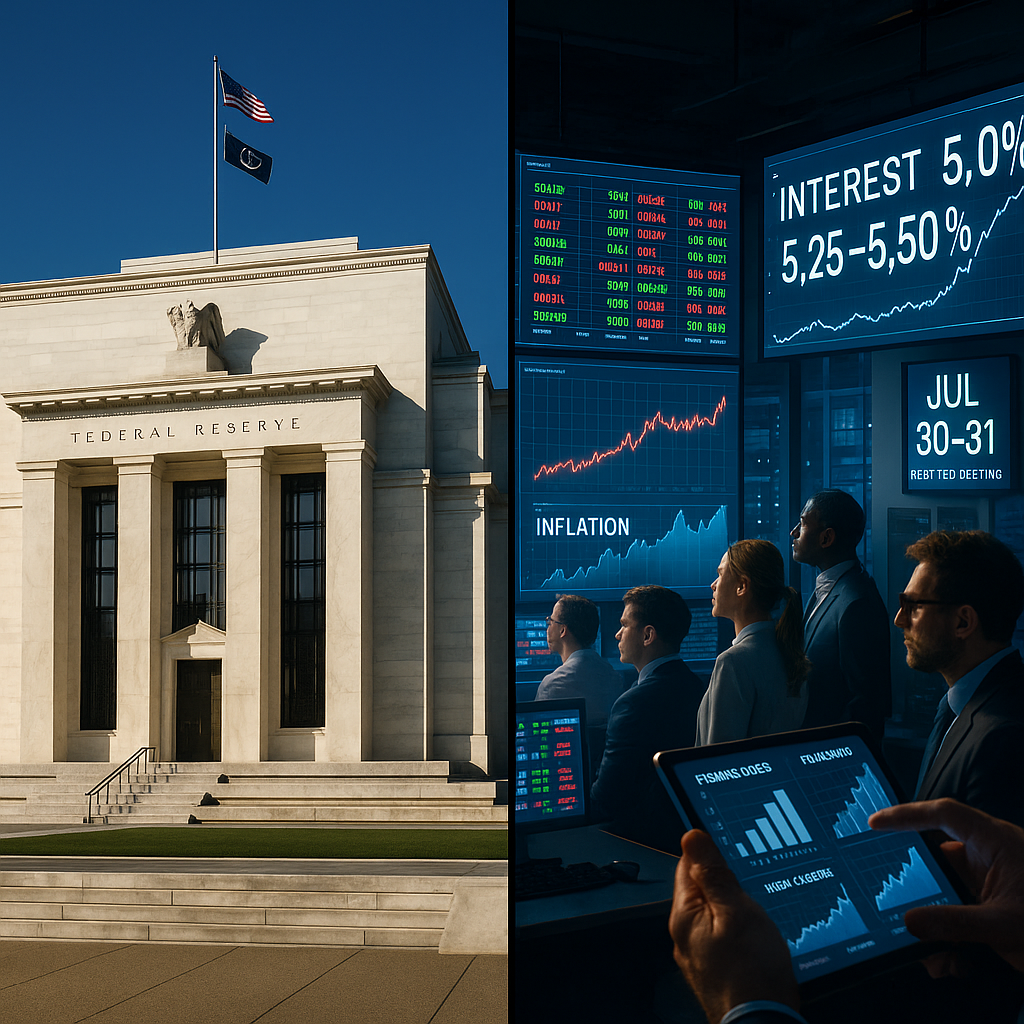
- Fed holds benchmark rate steady: The central bank voted unanimously to maintain the federal funds rate at its current range of 5.25% to 5.5%.
- Inflation pressures persist: Fed officials noted improvements but stressed inflation is still “elevated,” especially in housing and core services.
- Cautious messaging from Powell: Fed Chair Jerome Powell reiterated that convincing evidence of cooling inflation is needed before considering rate cuts.
- Market expectations adjust: Many analysts now anticipate only one rate cut, likely later in 2024, rather than the three previously forecast at the year’s start.
- Tech sector and borrowers watch closely: Stable rates influence tech valuations and the cost of loans for startups, remote workers, and smart device buyers.
- Next Fed policy meeting set for July: Further signals about rate direction and economic sentiment are expected at the next gathering.
Read on for a closer look at what this means for your wallet, tech investments, and everyday digital decisions.
Introduction
The Federal Reserve kept its key interest rate unchanged at 5.25% to 5.5% during Wednesday’s June meeting in Washington. This cautious approach continues as inflation remains above its 2% goal. With Fed Chair Jerome Powell signaling that rate cuts are unlikely without clearer signs of cooling prices, tech companies, borrowers, and investors are watching closely for further indications at July’s policy update.
Fed Decision: Rates Hold Steady
The Federal Reserve kept its benchmark interest rate unchanged in the 5.25% to 5.5% range at Wednesday’s June policy meeting, marking the sixth consecutive pause since last July. The Federal Open Market Committee’s decision was unanimous, reflecting broad agreement among policymakers on maintaining the current stance.
The central bank’s latest economic projections indicate that officials anticipate rates will remain higher for longer than previously expected. Fed data shows most committee members now forecast fewer rate cuts for the remainder of 2024.
Stay Sharp. Stay Ahead.
Join our Telegram Channel for exclusive content, real insights,
engage with us and other members and get access to
insider updates, early news and top insights.
 Join the Channel
This steady approach follows mixed economic signals. Recent data shows stronger-than-expected economic growth alongside persistent inflation. The Fed’s decision maintains what officials describe as a “restrictive stance” on monetary policy.
Inflation Remains in Focus
Core inflation, which excludes volatile food and energy prices, continues to exceed the Fed’s 2% target. Recent reports place annual core inflation at 3.8%, with housing costs and service sector prices exerting particular pressure.
Fed officials have expressed specific concern about the services sector, where wage growth and pricing power remain robust. Housing, particularly rental prices, continues to weigh significantly on overall inflation.
Consumer spending has demonstrated resilience despite higher borrowing costs, complicating the Fed’s efforts to reduce inflation. Recently released retail sales data surpassed economists’ expectations, suggesting underlying economic strength.
Powell’s Cautious Messaging
Fed Chair Jerome Powell emphasized the need for “convincing evidence” that inflation is moving sustainably toward the 2% target. Powell stated during the post-meeting press conference,
“We’re not declaring victory. We think we have a ways to go.“
Addressing market expectations for rate cuts, Powell pointed out that it would be “premature” to speculate about when policy might ease. He highlighted the Fed’s commitment to keeping restrictive policy until inflation goals are conclusively within reach.
Powell acknowledged recent progress but underscored ongoing challenges in specific sectors. He stated,
“We’re seeing what we want to see, but we need to see more of it.“
Market and Analyst Response
Financial markets responded with initial volatility to the Fed’s announcement. Treasury yields rose, while stock indices experienced fluctuations. The dollar strengthened against major currencies as traders adjusted to the revised rate outlook.
Wall Street analysts broadly revised their rate cut projections, with many now expecting fewer reductions this year. For example, Goldman Sachs lowered its forecast to two cuts in 2024, down from three previously expected.
Major investment firms emphasized the Fed’s data-driven approach. Morgan Stanley’s chief economist stated in a client memo,
“The Fed is clearly prioritizing inflation control over growth concerns.”
What the Hold Means for Tech and Borrowers
The sustained high-rate environment continues to affect technology companies and startups, particularly in terms of venture capital funding and growth strategies. Early-stage businesses face ongoing challenges securing affordable financing.
For individual borrowers, mortgage rates remain elevated and housing affordability is constrained. Credit card interest rates continue at historically high levels, and auto loan costs remain significant.
Small business owners contend with persistent borrowing costs, though many have adapted their operations to the higher rate environment. The tech sector has responded by focusing more on profitability and cost efficiency.
To navigate these conditions, traders and investors may benefit from an enhanced understanding of risk management frameworks, particularly when rates remain high and borrowing costs limit access to capital.
Looking Ahead
The Fed’s next policy meeting is scheduled for July 30 and 31, with updated economic projections to be released. Key inflation measures, including the Personal Consumption Expenditures (PCE) index, are expected before the meeting.
In the coming weeks, several Fed officials are scheduled to speak, which may provide further insight into the committee’s current thinking. The next Consumer Price Index (CPI) report, due mid-month, will be closely watched for emerging inflation trends.
Stay Sharp. Stay Ahead.
Join our Telegram Channel for exclusive content, real insights,
engage with us and other members and get access to
insider updates, early news and top insights.
Join the Channel
Market participants balancing evolving economic data and policy shifts can bolster their approach by reviewing proven trading strategies that align with the Fed’s sustained restrictive stance.
Conclusion
The Fed’s steady rate stance underscores its careful approach as inflation remains above target and economic resilience complicates decisions. Policymakers are likely to maintain this posture until there is clear, sustained progress. What to watch: upcoming inflation reports and commentary from Fed officials leading into the next rate decision on July 30 and 31.
Those looking to cultivate the patience needed in uncertain or inactive periods may benefit from resources on trading psychology, helping to manage expectations and maintain discipline while awaiting further policy changes.




Leave a Reply