
Key Takeaways
-
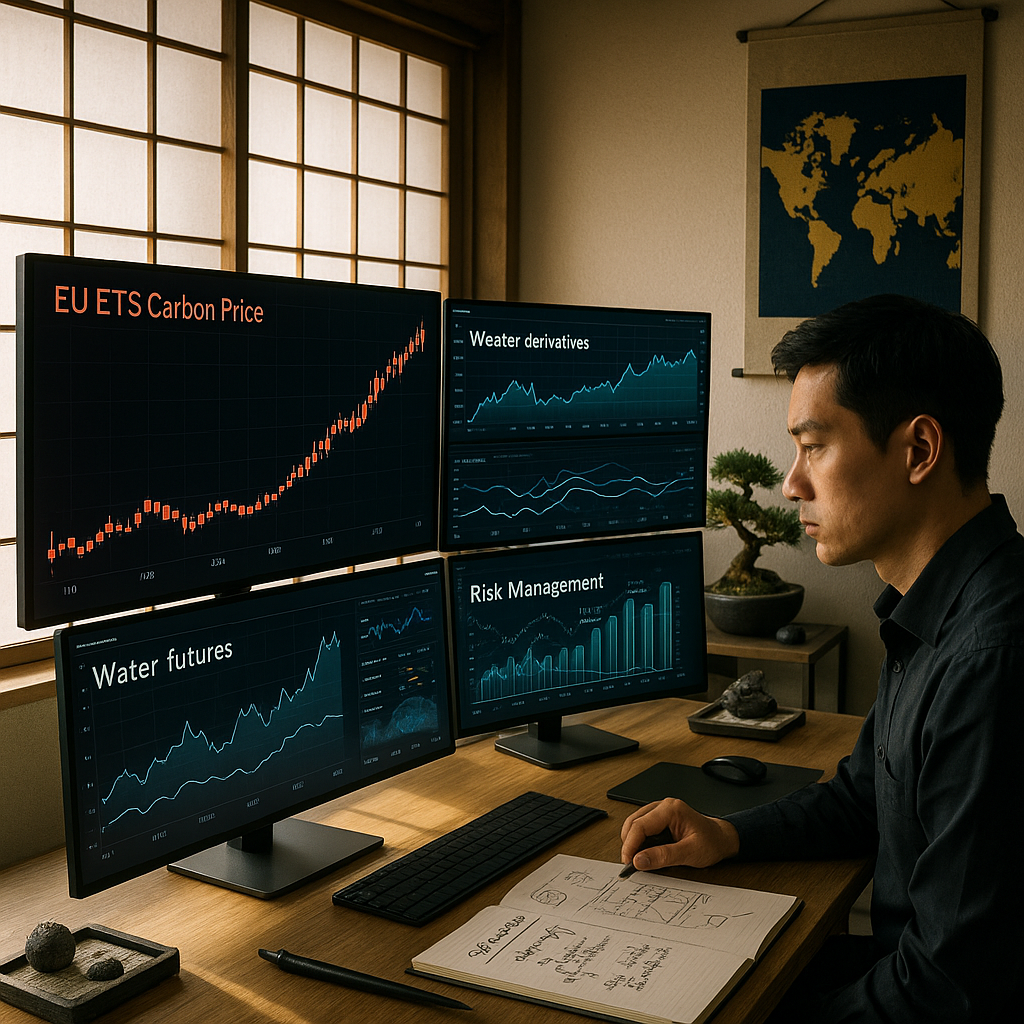
Climate finance tools are revolutionizing how businesses, investors, and governments address climate-related risks. Instruments such as the EU Emissions Trading System (EU ETS), carbon allowances, weather derivatives, and the emergence of water futures now offer disciplined, strategic avenues to hedge uncertainty and encourage alignment between financial objectives and environmental resilience across sectors.
-
The EU ETS enforces disciplined carbon risk management. By assigning a tradable price to carbon emissions, the EU ETS compels businesses to incorporate carbon risk strategies directly into their core operations, encouraging emission reductions and more responsible decision-making.
-
Carbon allowances transform emissions obligations into tradable financial assets. Organizations can hedge regulatory risks, manage compliance costs, and even profit from emissions-reduction efforts, turning environmental responsibility into tangible business value.
-
Weather derivatives convert climate volatility into manageable financial risk. Sectors such as agriculture, energy, and transportation now use these derivatives to hedge against unpredictable weather events, stabilize revenues, and encourage disciplined long-term planning.
-
Water futures introduce price signals for managing critical resource challenges. By trading contracts tied to water availability and pricing, companies and regions facing scarcity can encourage efficient usage, ensure supply, and mitigate price shocks.
-
Proactive hedging with climate finance instruments fosters resilience. Systematic use of these tools shifts market participants from reactive loss mitigation to proactive risk management, empowering businesses to adapt and maintain operational stability in the face of climate disruption.
-
Financial innovation accelerates the alignment of markets with climate resilience goals. By embedding climate instruments in mainstream finance, organizations are incentivized to move beyond ad-hoc adaptation, adopting risk management strategies that reward structured discipline and preparation for uncertainty.
As climate volatility continues to intensify, mastery over these financial tools will distinguish resilient “market warriors” from reactive participants. The disciplined application of climate finance instruments grants traders, companies, and policymakers a crucial edge on the journey to sustainability and effective risk control.
Introduction
The rules of climate risk are being rewritten, one carbon allowance, weather derivative, and futures contract at a time. Today’s arsenal of climate finance tools, from the EU Emissions Trading System to carbon allowances, weather hedges, and water futures, empowers businesses, governments, and investors to advance beyond mere compliance. Instead, climate uncertainty itself becomes an arena for strategic mastery.
Climate finance offers far more than a pathway to ESG compliance. These instruments equip organizations with disciplined, market-driven methods to hedge volatility, strengthen operations, and channel financial incentives into authentic environmental resilience. Whether it is carbon risk management, planning for drought, or adapting to energy shocks, the judicious deployment of climate instruments transforms risk into opportunity. This approach fortifies operational stability and is fast becoming the mark of truly resilient organizations.
Let’s explore how a disciplined, strategic approach to climate finance tools can transform risk management, enhance adaptation, and create lasting competitive advantage.
Stay Sharp. Stay Ahead.
Join our Telegram Channel for exclusive content, real insights,
engage with us and other members and get access to
insider updates, early news and top insights.
 Join the Channel
Understanding Climate Finance Instruments
Evolution of Climate Finance Markets
Over the past two decades, climate finance markets have evolved dramatically from theoretical models into sophisticated trading ecosystems. This journey, from the early days of the Kyoto Protocol to today’s liquid carbon markets, reflects a deep shift in how the financial world addresses environmental risk.
The origins of modern climate finance trace back to the 1997 Kyoto Protocol, which laid the groundwork for international emissions trading. Early carbon markets grappled with issues such as low liquidity, price volatility, and regulatory uncertainty, limiting their effectiveness. Despite these growing pains, these pioneering initiatives set the stage for a rapid evolution.
A defining milestone occurred in 2005 with the launch of the European Union Emissions Trading System (EU ETS). As the world’s first major carbon market, the EU ETS introduced a genuine cap-and-trade system that demonstrated the power of market-based incentives in driving emissions reductions across industries.
The rise in market sophistication and scale is evident in market capitalization:
- 2005: EU ETS launches with about €6 billion in market value
- 2010: Global carbon market reaches €92 billion
- 2015: Paris Agreement propels markets to €144 billion
- 2022: Global carbon market exceeds €760 billion
This exponential growth is not limited to volume. The array of climate finance products now includes:
- Compliance carbon markets (EU ETS, California Cap-and-Trade)
- Voluntary carbon offset markets
- Weather derivatives for hedging climate risks
- Catastrophe bonds for climate-linked disasters
- Green bonds and sustainability-linked loans
- Water futures and water rights trading
Dedicated exchanges such as the European Energy Exchange (EEX), Intercontinental Exchange (ICE), and Chicago Mercantile Exchange (CME) now offer standardized contracts and high liquidity. Advancements in clearing mechanisms and derivative structures further support the reliability and credibility of these markets.
The regulatory framework has matured alongside the markets. The EU’s Markets in Financial Instruments Directive (MiFID II), for example, now covers emissions allowances, elevating them to the status of recognized financial instruments. This oversight bolstered trust, curbed market manipulation, and improved environmental integrity.
Participation in climate finance has also diversified. What began as a compliance exercise for regulated industrial entities has grown into a rich marketplace involving:
- Energy and industrial firms with mandated obligations
- Asset managers, hedge funds, and proprietary trading firms
- Environmental investment funds and institutional investors
- Retail investors using ETFs and structured financial products
These developments underscore the mainstreaming of climate finance. Instruments that were once considered niche have become essential risk management and investment tools, central to the transition toward a lower-carbon economy. As we examine individual markets (starting with the EU ETS), this context illustrates the depth, breadth, and potential for strategic advantage that these instruments now offer.
Deep Dive: European Carbon Market (EU ETS)
Among global climate finance markets, the European Union Emissions Trading System sits at the epicenter. As the largest cap-and-trade carbon market, the EU ETS serves as both a bellwether and laboratory for market-driven environmental policy.
Market Mechanics and Structure
The EU ETS operates on a clear cap-and-trade model. For each tonne of CO₂-equivalent emissions, a company must hold a corresponding emissions allowance. This system covers around 40% of the EU’s total emissions, including power generation, industry, and aviation.
Key features of the EU ETS include:
- Annual Compliance Cycle: Companies must submit sufficient allowances for their verified emissions by April 30 each year.
- Allowance Allocation: Allowances are mainly auctioned on regulated platforms such as EEX, supplemented by a shrinking allocation of free permits to prevent industrial “carbon leakage.”
- Secondary Market Activity: High-liquidity trading in spot, futures, and options markets on exchanges and OTC venues.
- Market Stability Reserve (MSR): This mechanism automatically adjusts supply to prevent price collapse or extreme spikes, providing a unique approach to risk management.
- Standardized Products: Offerings include spot EUAs (European Union Allowances), EUA futures (highly liquid), options, and various spreads.
Since 2021, Phase IV of the EU ETS features a more aggressive annual reduction of the permissible emissions cap (2.2% per year). This structural tightness creates an environment ripe for long-term price appreciation.
Price Discovery and Drivers
Pricing in the EU ETS is shaped by several fundamental and technical forces.
Fundamental Factors:
- Energy Market Linkages: Carbon prices are intricately linked to fuel price differentials. For example, shifts in natural gas and coal prices influence power producers’ fuel choices, which can increase or decrease demand for carbon allowances.
- Policy Announcements: Regulatory developments deliver the sharpest price moves. The 2019 activation of the Market Stability Reserve and the 2021 “Fit for 55” climate plan caused significant price revaluations.
- Economic Activity: Industrial output, energy demand, and even events like the COVID-19 pandemic directly impact emissions and, consequently, allowance demand.
- Weather Events: Sudden shifts in temperature increase or reduce energy-driven emissions, causing short-term allowance demand spikes.
Technical and Market Factors:
Stay Sharp. Stay Ahead.
Join our Telegram Channel for exclusive content, real insights,
engage with us and other members and get access to
insider updates, early news and top insights.
Join the Channel
- Auction Signals: Outcomes and bid coverage at allowance auctions provide important market sentiment indicators.
- Compliance Calendar: Allowance purchases spike in the months preceding annual compliance deadlines, driving seasonal volatility.
- Speculative Participation: Hedge funds, asset managers, and commodity trading houses now represent a significant share of futures trading, shaping short-term price dynamics.
Volatility remains high, with prices ranging from under €5/tonne in 2017 to peaks above €100/tonne in 2022. This creates a fertile environment for disciplined, opportunity-seeking traders.
Strategic Trading Approaches
Seasoned market participants employ a variety of strategies in the EU ETS:
- Compliance Hedging: Industrial and energy companies lock in future allowance costs by phasing purchases over multiple years.
- Spread Trading: Opportunities arise through price differentials between allowances (e.g., standard EUAs vs. aviation EUAAs), across vintage years, or by integrating carbon, fuel, and power markets in complex “clean dark/spark” spread trades.
- Fundamental Analysis: Careful study of the emissions reduction cost curve helps identify where policy or price shocks may spur widespread industry response.
- Event-Driven Positioning: Strategic exposure is taken in anticipation of key auctions, regulatory changes, or annual compliance cycles.
- Arbitrage: Traders leverage inefficiencies between spot and futures markets, or between the EU ETS and other carbon markets (such as the UK ETS), exploiting regional or temporal dislocations.
The EU ETS not only displays sophisticated market structure but also stands as a model of how policy-driven markets can create unique opportunities for those equipped with discipline, insight, and advanced risk management skills.
Carbon Allowances as Strategic Assets
Carbon allowances have quickly evolved far beyond their compliance roots, taking on roles as strategic financial assets with unique characteristics, risk profiles, and portfolio benefits. Their rise presents new options for asset managers, traders, and even corporate treasuries seeking diversification or impact.
Unique Portfolio Characteristics
Carbon allowances possess distinctive qualities that set them apart from traditional commodities or equities:
- Policy-Driven Returns: Unlike standard commodities, supply is fixed by regulation (not resource constraints), with tightening emission caps acting as a powerful upward price driver. For example, EU ETS returns from 2018 to 2022 averaged over 30% annually.
- Correlation Benefits: Carbon prices sometimes move independently of broader equity or commodity markets, offering potential diversification for multi-asset portfolios.
- Volatility Profile: Regulatory developments and policy cycles lead to sharp price moves, but less susceptibility to broader macroeconomic cycles.
- Responsiveness to Global Climate Dynamics: Allowances are sensitive not only to policy, but also changing industrial trends, energy transition initiatives, and physical climate risks.
Strategic Applications Across Sectors
- Energy and Utilities: Companies use carbon allowances to hedge future compliance costs and manage exposure to regulatory risk.
- Manufacturing and Industrial Sectors: Strategic buying and trading can buffer against price spikes and incentivize operational upgrades towards emissions efficiency.
- Financial Institutions: Funds and proprietary desks participate for both absolute returns and to offer ESG-aligned investment products to their clients.
- Agriculture and Transport: As future climate markets expand (with potentials for methane credits or transport-focused schemes), sectors will have access to emerging tools for hedging their own environmental risks.
These allowances, when integrated thoughtfully into portfolios, can bolster risk-adjusted returns while aligning with strategic sustainability objectives. That’s a dual value proposition increasingly sought by modern investors.
Weather Derivatives and Water Futures: Broadening the Climate Finance Toolkit
While carbon markets headline climate finance, innovation now extends into new frontiers such as weather derivatives and water futures. These instruments help businesses and communities manage risks beyond regulatory compliance, addressing direct exposure to weather and resource scarcity.
Weather Derivatives
Weather derivatives enable companies to hedge against specific, quantifiable climate risks like unseasonable rainfall, temperature swings, or catastrophic storms. Energy utilities, agricultural producers, travel and event sectors, and even municipalities use these contracts to:
- Stabilize revenues against weather-driven volatility in demand or production
- Support disciplined budgeting in the face of uncertain seasons
- Underwrite crop insurance, transport services, or tourism events
Such derivatives are traded over-the-counter or on exchanges like CME, often tying payouts to widely available meteorological indices. Their value lies in converting uncontrollable climate variability into predictable financial outcomes, supporting more stable long-term operations.
To understand more about how these contracts are structured and how hedges are implemented, see weather derivatives explained.
Water Futures
Emerging water futures markets, exemplified by the CME’s California Water Index futures, introduce speculative and risk management tools to address challenges in regions facing water scarcity or unstable supply. Key benefits include:
- Transparent price signals fostering efficient water use and allocation
- New tools for farmers, municipalities, and industrial users to hedge against supply risk or cost spikes
- Data-driven adaptation, encouraging investment in conservation and alternative technologies
For more context on market dynamics, hedging methods, and regional case studies, review basis risk in water futures.
These instruments extend climate risk management well beyond emissions, enabling financial market participation in the stewardship of vital resources.
Broader Industry Applications
- Healthcare: Hospitals hedge power and water supply costs to ensure patient care continuity during extreme weather.
- Finance: Banks use weather and catastrophe-linked instruments to build resilience into loan portfolios and insurance products.
- Education: Public institutions manage budgets for facility operations affected by heat, cold, or precipitation.
- Retail and E-commerce: Chains hedge risks related to logistics disruptions from weather events.
- Legal: Water rights and climate-linked contracts increasingly require specialized legal support given new risks and regulatory frameworks.
- Environmental Science: Data from these markets improves climate modeling, supporting both science and risk pricing for the public sector.
These real-world applications illustrate the broadening influence of climate finance tools beyond traditional carbon markets, embedding climate resilience into the fabric of diverse sectors.
Conclusion
The dramatic rise and ongoing refinement of climate finance instruments mark a turning point in how markets respond to global environmental challenges. Tools like the EU ETS, carbon allowances, weather derivatives, and water futures no longer represent isolated efforts. They form an integrated financial ecosystem where disciplined participation and strategic mastery create real value and resilience.
Success in this arena now depends on much more than compliance. Traders, investors, and institutions must harness technical competence, rigorous analysis, and, above all, disciplined strategy to navigate climate markets’ volatility and complexity. The transformation of carbon allowances into strategic assets, the adoption of weather and water hedges, and the maturing regulatory oversight all underscore the emergence of a new class of market participants: those who train for uncertainty, who welcome volatility as opportunity, and who view risk management as an evolving craft.
For those seeking to master this environment, building a comprehensive risk management framework is essential.
Looking forward, climate volatility and resource pressure will only intensify. Those who commit to continuous learning (treating climate finance as both a field of innovation and a dojo for disciplined practice) will cultivate the foresight and adaptability necessary to lead. As climate finance becomes central to global markets, the next wave of resilience and leadership will belong to those who do not simply react, but who anticipate, innovate, and master an ever-changing financial landscape. The real measure of success will not be who survives the transition, but who shapes it with strategy, discipline, and enduring impact.
For a broader understanding of technical methodologies supporting these markets, visit our technical analysis hub. Similarly, for the psychological edge required in volatile environments, explore the mindset & psychology cornerstone.


Leave a Reply