
Key Takeaways
-
Privacy-first digital cash introduces a new standard for electronic money: The European Central Bank (ECB) is championing the digital euro as a breakthrough in privacy, offering offline payment capabilities that closely mirror the anonymity and accessibility of physical cash. This positions the digital euro as distinct from other central bank digital currencies (CBDCs) and current digital payment systems.
-
Inclusion drives design from the outset: Real-world input from small merchants and vulnerable groups is directly informing the features of the digital euro, ensuring the system tackles real issues such as accessibility, usability, and fair access for everyone.
-
Traditional banks remain pivotal as distribution partners: The ECB’s collaborative framework leverages commercial banks and payment providers, utilizing established infrastructure to achieve broad reach, trust, and seamless integration for consumers and businesses across Europe.
-
Offline payments bridge digital and real-world economies: The digital euro empowers users to make resilient, cash-like payments without internet access. This is essential for rural communities, during network disruptions, and for those excluded from always-on connectivity.
-
Combining innovation with monetary sovereignty: The digital euro is crafted to reinforce Europe’s authority over its currency, offering a robust public payment choice alongside growing private digital currencies, thus supporting the euro’s stability and wide usability.
-
Small merchants gain cost-effective payment options: Focused stakeholder involvement and inclusive design are poised to lower barriers for small businesses. The digital euro’s tailored solutions present an affordable alternative to costly card systems, simplifying secure payments for merchants.
-
User trust built on transparency and control: Transparent oversight, robust privacy protections, and genuine user autonomy are integral to the digital euro, bolstering public confidence, especially among Europeans who prioritize data privacy.
Disciplined, collaborative innovation is placing the digital euro at the forefront of CBDC development. It provides a blueprint for how digital currencies can empower individuals, strengthen local businesses, and seamlessly merge the best of cash and digital payment systems. The sections that follow delve deeper into these dynamics and spotlight the next steps in Europe’s digital currency transformation.
Introduction
Designing a digital euro for all isn’t a lofty goal. It is fast becoming a reality, shaped by the voices and needs of real users. As the ECB takes decisive steps to lay the foundation for Europe’s digital currency, its strategy prioritizes inclusivity by listening directly to small merchants and communities that traditional systems often overlook.
By embedding privacy-centric features, enabling offline payments, and fostering strong partnerships with traditional banks, the ECB is determined to balance security, accessibility, and widespread public trust. Understanding the ECB’s user-driven approach reveals not only its ambition to set a benchmark for digital cash, but also why its model may become the global standard for digital payments.
The ECB’s Inclusive Design Approach to the Digital Euro
Prioritizing Vulnerable Users and Small Merchants
At the heart of the digital euro initiative lies the principle that a truly effective CBDC must serve every segment of society. Expanding on conventional fintech models that have historically prioritized large businesses and mainstream users, the ECB’s inclusive approach signals a transformative shift.
Stay Sharp. Stay Ahead.
Join our Telegram Channel for exclusive content, real insights,
engage with us and other members and get access to
insider updates, early news and top insights.
 Join the Channel
Two stakeholder groups stand out within this framework: vulnerable users and small merchants. Vulnerable users encompass elderly citizens, people with disabilities, and those facing financial exclusion. The ECB engages these communities through dedicated user research, accessibility workshops, and targeted usability tests, ensuring the digital euro remains functional regardless of personal capability, experience, or social standing.
Small merchants, with their lean operations and minimal technical infrastructure, present unique hurdles and needs. Through hands-on focus groups, prototype trials, and regional business consultations throughout Europe, the ECB has gathered actionable feedback on pressing issues like transaction fees, settlement speed, and integration with current point-of-sale (POS) systems.
Insights from these collaborations have already resulted in practical changes. In one example from Northern Italy, elderly shopkeepers highlighted onboarding complexities, prompting the ECB to streamline registration and create user-friendly merchant interfaces. Such constant, iterative refinement keeps the digital euro anchored in real-world utility.
This foundation ensures the digital euro is not just a technological advancement, but a tool genuinely accessible and beneficial for people at every level of society. Other digital payment systems have often struggled to fulfill this promise.
User Feedback Integration in the Development Process
To systematically address and incorporate public input, the ECB has built a multi-layered framework designed for comprehensive engagement at every development stage.
The process begins with the Digital Euro User Panels: diverse citizen groups from all corners of the eurozone who participate in prototype trials, interface reviews, and feature assessments. This is augmented by wide-scale surveys involving over 40,000 individuals and businesses, providing both qualitative and quantitative feedback.
This three-pronged approach includes:
- Initial conceptual feedback to shape proposed features and user scenarios.
- Iterative prototype testing with continuous improvements based on observed pain points and suggestions.
- Field trial evaluation simulating real-world implementation within both urban centers and underserved regions.
Concrete examples of this feedback in action are already evident. Early privacy concerns prompted the development of advanced privacy features, such as options for anonymous low-value payments. In rural communities, reports of unreliable internet led to a priority shift toward robust offline payment mechanisms.
Transparency is central to this process. The ECB regularly publishes detailed updates outlining key user concerns and the rationale behind pivotal design decisions. This maintains public trust, demystifies the development timeline, and reinforces a sense of collective ownership in the project.
By transparently converting real user feedback into actionable improvements, the ECB demonstrates a proactive stance rarely seen in digital finance rollouts.
Balancing Privacy with Regulatory Compliance
Navigating the complex intersection of privacy and regulation is perhaps the digital euro’s greatest challenge. The ECB’s solution rests on a tiered privacy framework that addresses user demands and legal obligations in equal measure.
This privacy-by-design philosophy means that privacy protections are integrated into the very architecture of the digital euro. The system supports:
- Basic transactions (typically under €50) that require little or no personal data, emulating cash.
- Standard transactions with limited data exposure, balancing security and anonymity.
- High-value transactions necessitating comprehensive identification and compliance with anti-money laundering (AML) and counter-terrorist financing (CTF) laws.
The structure is driven by strong public demand. In ECB surveys, 43% of Europeans named privacy as their chief concern about digital currencies. In response, groundbreaking cryptographic tools are incorporated, including:
- Zero-knowledge proofs to verify transaction legitimacy without exposing user data.
- Blind signature technology for validating payments without tracking users.
- Selective disclosure protocols that allow users to reveal only essential details for specific transaction requirements.
Stringent data minimization ensures information storage only for legal minimums and prevents comprehensive user profiling. Merchants access only what is necessary for each sale, shielding sensitive payment histories and personal data.
With this innovative privacy framework, the ECB is not only upholding the euro’s traditional values but also raising the bar for digital payment privacy within regulatory safeguards. These measures establish the digital euro as one of the most privacy-centric electronic currencies globally. It addresses growing consumer expectations in the digital era.
Technical Accessibility and Offline Functionality
Technical accessibility is a lynchpin of the ECB’s inclusivity agenda. Recognizing the limitations of existing payment networks, the ECB has gone beyond standard solutions, adopting advanced offline capabilities that set the digital euro apart from most other payment methods.
Stay Sharp. Stay Ahead.
Join our Telegram Channel for exclusive content, real insights,
engage with us and other members and get access to
insider updates, early news and top insights.
Join the Channel
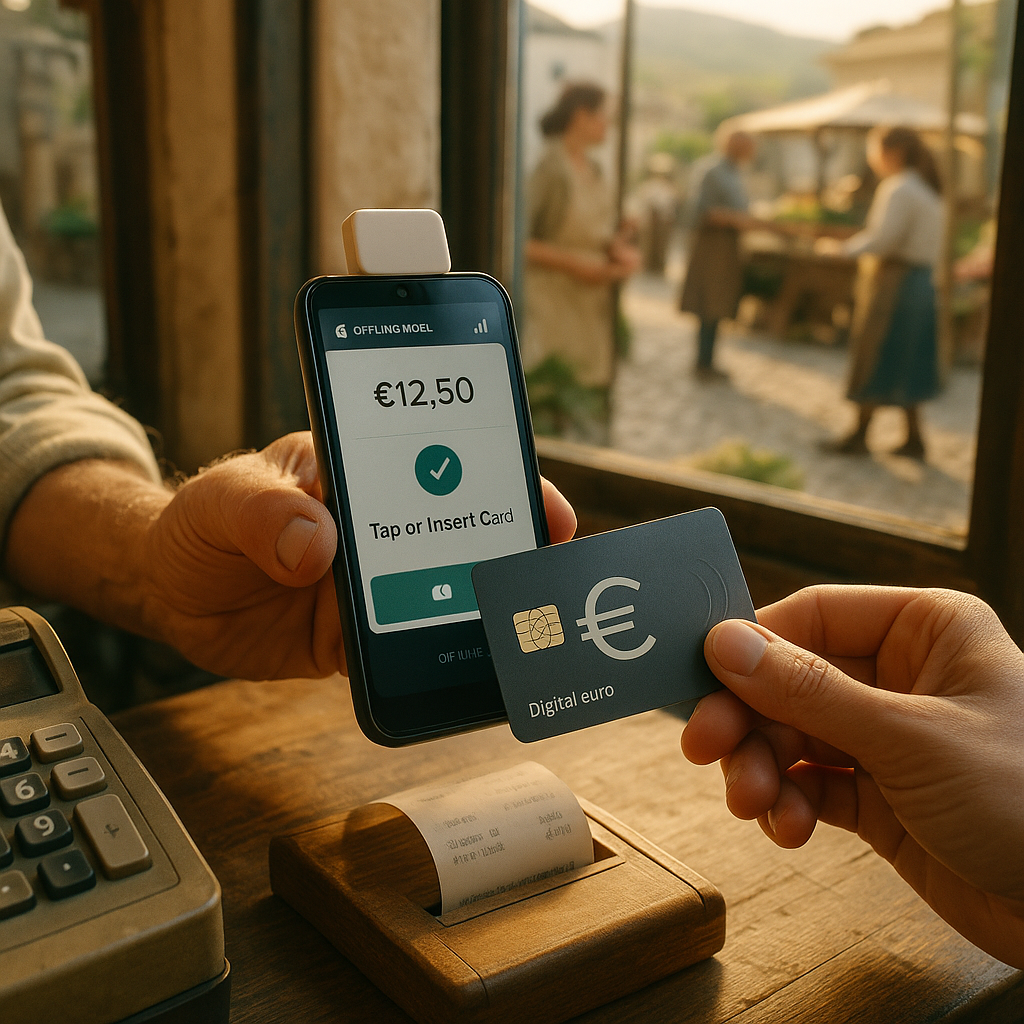
With offline functionality, the digital euro becomes a true cash-equivalent, empowering transactions without an internet connection. This feature directly addresses scenarios such as:
- Remote and rural regions where connectivity remains inconsistent.
- Emergency or disaster conditions during which digital infrastructure is down.
- Typical daily obstacles like underground spaces or buildings with no network signal.
- Greater accessibility for at-risk or less tech-savvy populations.
Technically, this is executed through secure element architectures found in modern payment cards, but with capabilities tailored for both online and offline use. Transactions are logged locally and reconciled to the central system when devices regain connectivity, preserving both security and transactional integrity.
User trials confirmed high demand for this feature. Thirty-eight percent of surveyed merchants cited worries about network reliability as a primary barrier. The ECB’s design ensures simple transaction status indicators and seamless user experience regardless of connectivity, reducing friction for both merchants and customers.
Accessibility is expanded further through compliance with international digital accessibility standards (WCAG 2.1 AA), incorporating:
- Optimized screen readers for visually impaired users.
- Voice commands for users with mobility limitations.
- Intuitive, streamlined interfaces designed to minimize cognitive demands.
- Customizable visuals for enhanced readability.
These features are being developed with ongoing input from advocacy groups for people with disabilities, embedding accessibility into the DNA of the digital euro.
By combining offline resilience and universal accessibility, the ECB is setting a new paradigm. This approach ensures that digital currency is neither exclusive nor conditional on technological privilege.
Small Merchant Integration and Point-of-Sale Solutions
Empowering small businesses is a defining theme in the digital euro’s operational strategy. The ECB’s research has shown that small merchants, from rural market vendors to independent urban shops, face significant challenges: cost, technical complexity, and resistance to disruptive change.
In response, the ECB has developed an ecosystem of POS options designed to match these realities. Key features include:
- Low or zero upfront costs, with solutions that leverage merchants’ existing devices (smartphones or tablets) as payment terminals.
- Simple integration with current systems and accounting tools, minimizing disruption.
- Quick, automatic settlement and reconciliation to support better cash flow and operational clarity.
Hands-on testing across a wide range of retail environments has driven refinements. In pilot programs, 67% of small merchants cited hardware costs as deterrents while 72% wanted trouble-free integration with familiar systems. The ECB’s response takes several forms:
- Purely software-based terminals, requiring no special equipment investments.
- Minimal hardware ‘plug-in devices’ for those who need physical terminals but wish to avoid high expenses.
- QR code acceptance reducing barriers for merchants and customers alike.
- API toolkits for integrating the digital euro with existing POS and management platforms.
Fee structures support merchant sustainability by being significantly lower than traditional card processor fees. Forecasts suggest potential savings for small merchants between 0.5% and 1.2% per transaction, providing a meaningful boost to already tight margins.
In practice, this approach is already delivering results. A Lithuanian market pilot saw shopkeepers, some with minimal technology experience, process payments using personal smartphones and digital euro apps. Setup time averaged under 15 minutes, demonstrating that truly inclusive finance can be quick and practical.
Beyond Retail: Sector-Wide Applications
While the digital euro’s design centers on everyday retail, its architecture and principles also promise broad applicability across numerous sectors:
- Healthcare: Offline payment capabilities enable secure patient co-pays at clinics with poor connectivity, and privacy-centric protocols protect sensitive personal expenses.
- Education: Schools and universities can accept tuition or activity fees both online and offline, with accessibility features ensuring equitable access for all students and parents.
- Legal and Compliance: The tiered privacy framework supports confidential settlement of legal or notarial fees while satisfying necessary regulatory reporting.
- Marketing and Consumer Analytics: For small businesses, the accessible payment infrastructure enables rich (but anonymized) transaction analytics to improve service offerings without infringing on user privacy.
- Finance: Integration with risk management tools and instant settlements positions the digital euro as a future backbone of both consumer finance and interbank transactions.
This sector diversity underlines the foundational versatility and broad utility of the ECB’s approach.
Conclusion
The ECB’s commitment to inclusive, resilient innovation is setting a standard for what modern digital currencies can achieve. By embedding the principles of accessibility, privacy, and practical usability from the ground up, the digital euro is designed to serve societies’ most pressing needs, not just its most visible or profitable markets. Transparent feedback integration ensures continuous adaptation, while robust support for small merchants and sector-wide applicability fosters an interconnected, prosperous digital economy.
Looking forward, the way the digital euro moves from prototype to everyday reality will define much more than payment habits. It will test the value of true user-centric design in central banking. Success will require ongoing discipline, willingness to adapt, and active collaboration. This is a philosophy aligned with the spirit of the trading dojo: mastering strategy, resilience, and disciplined innovation to turn complex challenges into opportunities for lasting transformation.
Ultimately, those institutions and communities that proactively embrace this shift, adopting inclusive, adaptable solutions and committing to continuous learning, are poised to lead Europe’s digital future. The challenge is not only to implement new technologies, but to harness them in a way that secures both personal empowerment and regional sovereignty in an evolving financial landscape.




Leave a Reply