
Key Takeaways
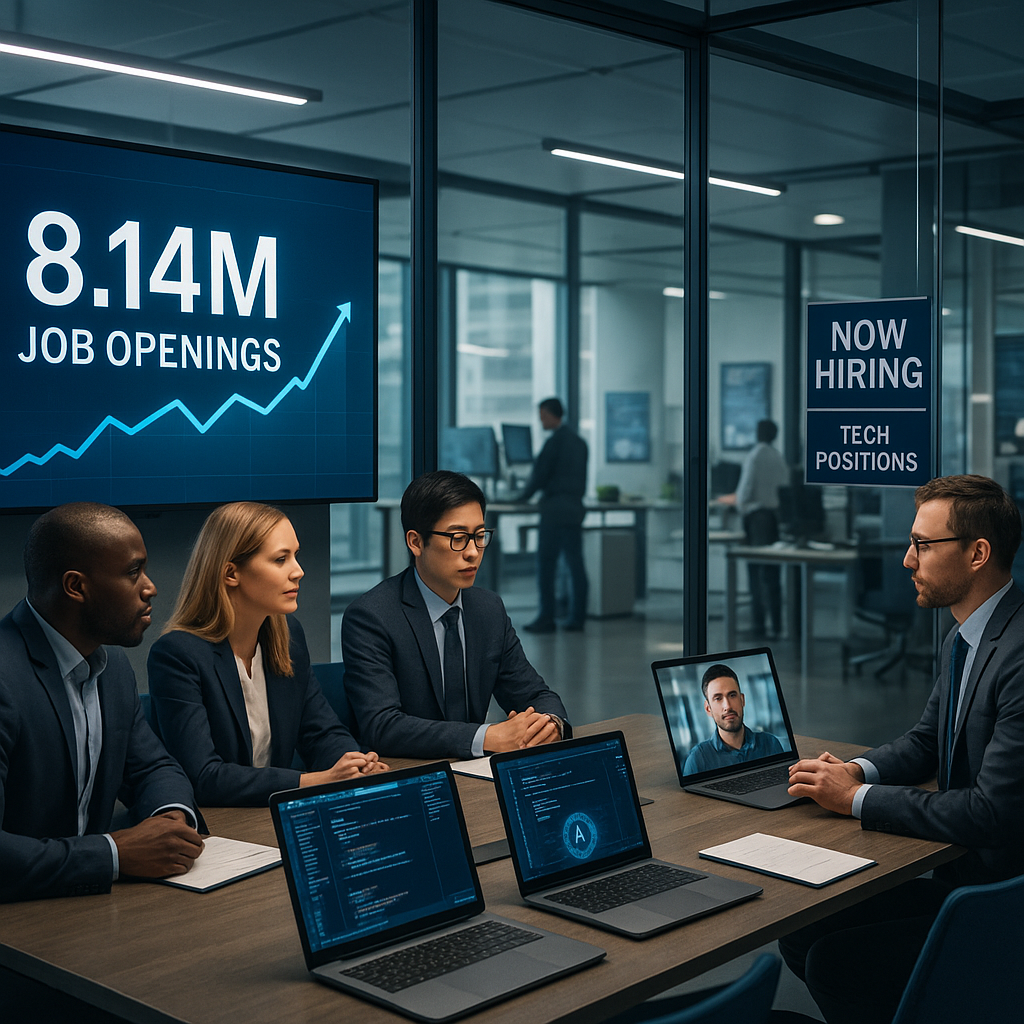
- Job openings climbed to 8.14 million in May, exceeding analyst expectations and highlighting continued labor demand.
- Tech sector hiring stabilized as technology companies maintained steady recruitment, reflecting confidence in digital transformation projects.
- Employers reported ongoing wage pressures as they compete for skilled talent, with wages holding firm.
- Strong labor numbers could influence Federal Reserve decisions on interest rates and inflation.
- The next jobs report is set for July 5, with analysts watching for continued momentum and shifts in tech and remote work trends.
Introduction
US job openings rose to 8.14 million in May, surpassing economist forecasts and underscoring ongoing strength in the American labor market, according to the Labor Department’s report released Tuesday. This growth points to strong demand for workers, including steady activity in tech hiring. It might affect upcoming Federal Reserve decisions as analysts keep an eye on changing trends in digital jobs and workplace innovation.
Key Findings from May’s Job Market Report
US job openings reached 8.14 million in May, beating economist forecasts of 7.85 million, according to Labor Department data. That’s a 3.2% increase from April’s revised figures.
The hospitality and leisure sector led with 1.2 million job openings. Professional and business services followed with 960,000 positions, while health care and social assistance employers reported 875,000 unfilled roles.
Quit rates held steady at 2.6%, indicating workers are still confident about finding new opportunities. The ratio of job openings to unemployed workers stood at 1.8-to-1 (well above pre-pandemic norms).
Stay Sharp. Stay Ahead.
Join our Telegram Channel for exclusive content, real insights,
engage with us and other members and get access to
insider updates, early news and top insights.
 Join the Channel
Tech Sector Employment Trends
Technology companies kept up robust hiring despite earlier industry layoffs. Positions in software development and artificial intelligence stayed in high demand; postings for technical roles rose 5.2% compared to April.
Major employers like Microsoft and Google’s parent company Alphabet focused recruitment on specialized areas such as cloud computing and machine learning. Enterprise software companies posted a 15% increase in openings for experienced developers.
Small and medium-sized tech firms broadened their search for talent, with remote jobs making up 42% of new technology postings. Startup hiring started to bounce back too, especially for roles in artificial intelligence and cybersecurity.
Wage Dynamics and Competition
Average hourly earnings in technology roles rose 4.8% year-over-year, surpassing the 4.3% growth seen in the broader private sector. Companies said competition is heating up for skilled workers in emerging tech fields.
Sign-on bonuses and flexible work options stayed common, especially for senior technical talent. Mid-sized companies have beefed up benefits packages so they can better compete with the bigger firms.
Regional tech hubs outside the usual hotspots also saw strong wage growth. Austin and Raleigh, for example, reported increases of 6.2% and 5.8% respectively for technical roles.
Economic Implications
The stronger-than-expected job openings data shows that the US labor market is still pretty resilient, even after recent interest rate hikes. Federal Reserve officials are expected to factor in these numbers to upcoming policy discussions.
Economists at Goldman Sachs point out there’s little sign of any cooling in labor demand, which could make the Fed’s efforts to contain inflation more complicated. David Mericle, chief economist, noted that the labor market remains significantly tighter than what many had anticipated.
Business confidence is holding strong. Based on a recent Business Roundtable survey, 65% of companies plan to maintain or even increase hiring through the third quarter.
What to Watch
The June employment report (slated for July 7) will offer more insight into US labor market dynamics. Economists predict that about 180,000 new jobs will be added.
The Federal Reserve’s next policy meeting, set for July 25-26, will be especially important in the wake of the latest job openings data. Market watchers will be focused on Chairman Powell’s comments about the labor market.
On July 15, CompTIA will release its third-quarter tech hiring outlook report, which should offer new projections for technology sector employment trends and skills demand.
Conclusion
Stronger-than-expected job openings in May show there is still strong demand for skilled workers, especially in technology and hospitality—even in the face of higher interest rates. This kind of labor market resilience poses new challenges for Federal Reserve policymakers and is shaping business hiring strategies. Keep an eye on the upcoming employment report on July 7, the CompTIA tech sector outlook on July 15, and the Fed’s next policy meeting on July 25-26. Those events should help clarify where the labor market is headed next.




Leave a Reply