
Key Takeaways
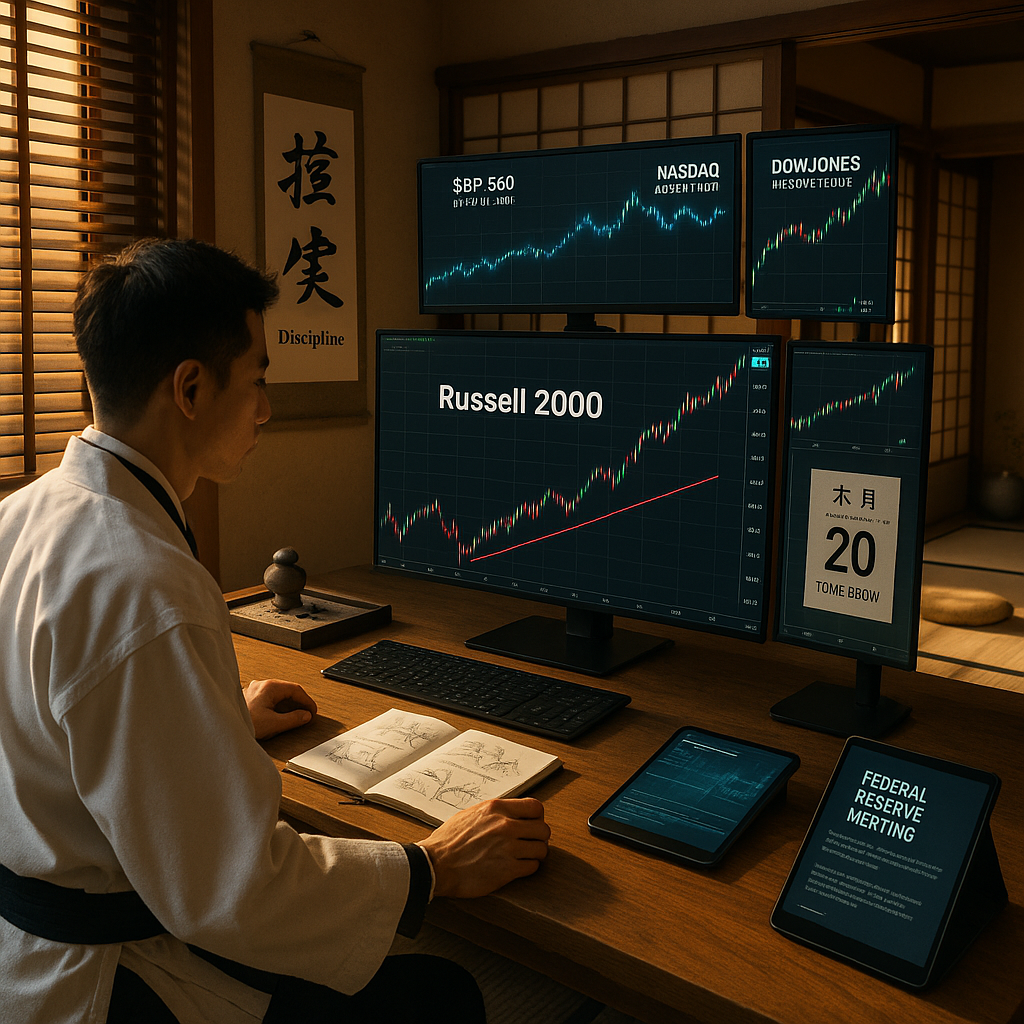
- Russell 2000 outperforms: The small-cap index climbed over 1.5%, outpacing major benchmarks and signaling renewed appetite for riskier assets.
- S&P 500 and Nasdaq set new records: Both indices closed at all-time highs, reflecting continued investor optimism in large-cap tech stocks.
- Fed decision approaches: Market focus shifts to tomorrow’s Federal Reserve announcement, as policymakers are expected to clarify the timing of future rate cuts.
- Traders exercise caution: Despite gains, trading volumes remained moderate as participants balanced bullish momentum with uncertainty about inflation and economic growth.
- Next key event: Fed press conference: Chair Jerome Powell’s comments will offer further insight into the central bank’s outlook and could set the tone for the remainder of the month.
Introduction
U.S. stocks reached new highs Tuesday in New York, with the Russell 2000 leading small-cap gains by climbing over 1.5% ahead of the Federal Reserve’s key monetary policy decision. The S&P 500 and Nasdaq also set records. Traders weighed cautious optimism against uncertainty regarding rates and economic growth while turning their attention to tomorrow’s Fed announcement.
Key Moves in the Market
The Russell 2000 surged 1.7% on Wednesday, marking its strongest performance in three weeks as small-cap stocks gained momentum. This move signals a potential broadening of the market rally beyond the dominant large-cap technology stocks that have led gains for much of the year.
The S&P 500 rose 0.4% to close at a new record high of 5,537, while the Nasdaq Composite added 0.3%, also finishing at an all-time high. The Dow Jones Industrial Average climbed 0.3%, continuing its upward trend but remaining just below its record peak.
Trading volume increased by approximately 8% compared to recent daily averages, indicating stronger conviction behind the day’s moves. Market breadth improved significantly, with advancing stocks outnumbering declining ones by more than 2-to-1 on the NYSE.
Stay Sharp. Stay Ahead.
Join our Telegram Channel for exclusive content, real insights,
engage with us and other members and get access to
insider updates, early news and top insights.
 Join the Channel
Sector Performance
Energy stocks led the day’s gains, climbing more than 2% as crude oil prices rebounded following inventory data showing a larger-than-expected drawdown. The sector has experienced volatility in recent weeks amid fluctuating global demand concerns.
Financial shares also performed strongly, rising 1.8% as regional banks rallied alongside the small-cap index. The steepening yield curve provided a more favorable environment for banks’ net interest margins.
Technology stocks posted gains but underperformed the broader market with a modest 0.2% increase. As the primary driver of market gains throughout 2024, the technology sector’s leadership has raised concerns about narrow market momentum. Today’s session helped partially alleviate those concerns.
Economic Data Influence
The Labor Department’s Job Openings and Labor Turnover Survey (JOLTS) reported job openings falling to 8.79 million in June, the lowest level since January 2021. This cooling in the labor market aligns with the Federal Reserve’s efforts to achieve a soft landing.
Michael Pearce, deputy chief U.S. economist at Oxford Economics, stated that the JOLTS data provides further evidence of normalizing labor market conditions. He added that this should give the Fed confidence that inflation pressures will continue to ease.
Factory orders increased 2.3% in June, surpassing economists’ expectations of a 1.9% rise. This resilience in manufacturing, despite higher interest rates, supported today’s market rally by easing some recession concerns.
Market Sentiment and Technical Analysis
The VIX, commonly known as the market’s fear gauge, declined 3.2% to 14.5, indicating reduced investor anxiety. The index has remained below its long-term average of 20 for most of the year, despite occasional spikes during geopolitical tensions.
Market breadth measurements improved, with the NYSE Advance-Decline line reaching its highest level since April. This technical indicator suggests more stocks are participating in the rally, which is a positive sign for market sustainability.
The Russell 2000’s break above its 200-day moving average represents a potentially significant technical development. Traders are closely monitoring this, as the small-cap index has lagged the broader market over the past two years. To better understand patterns and price levels for such technical developments, traders often refer to dedicated resources on technical analysis.
What Traders Are Watching Next
The July jobs report, scheduled for release Friday morning, is this week’s most significant economic catalyst. Economists expect approximately 175,000 nonfarm payroll additions and the unemployment rate to remain steady at 4.1%.
Second-quarter earnings season continues, with about 28% of S&P 500 companies still set to report. So far, 79% of companies have exceeded earnings expectations, slightly above the five-year average.
Federal Reserve officials’ upcoming speeches may provide additional clarity on the rate cut timeline. Markets currently assign a 70% probability to a September rate cut, according to CME FedWatch data, with particular attention on remarks from Fed Governor Christopher Waller scheduled for Monday. Understanding how economic events and monetary policy shifts affect market psychology is crucial, and many traders look to trading psychology principles to help manage their reactions.
Conclusion
U.S. stocks demonstrated renewed breadth as small-cap and financial shares joined the advance, signaling broader market participation beyond this year’s tech-driven trends. Easing labor pressures and resilient factory activity offered supportive context for traders focused on meaningful shifts rather than surface moves. What to watch: Friday’s July jobs report, ongoing earnings releases, and upcoming comments from Federal Reserve officials, which may clarify the interest rate outlook. For those looking to deepen their understanding of market movements and strategy frameworks, exploring various trading strategies can provide additional insight and preparation.




Leave a Reply