
Key Takeaways
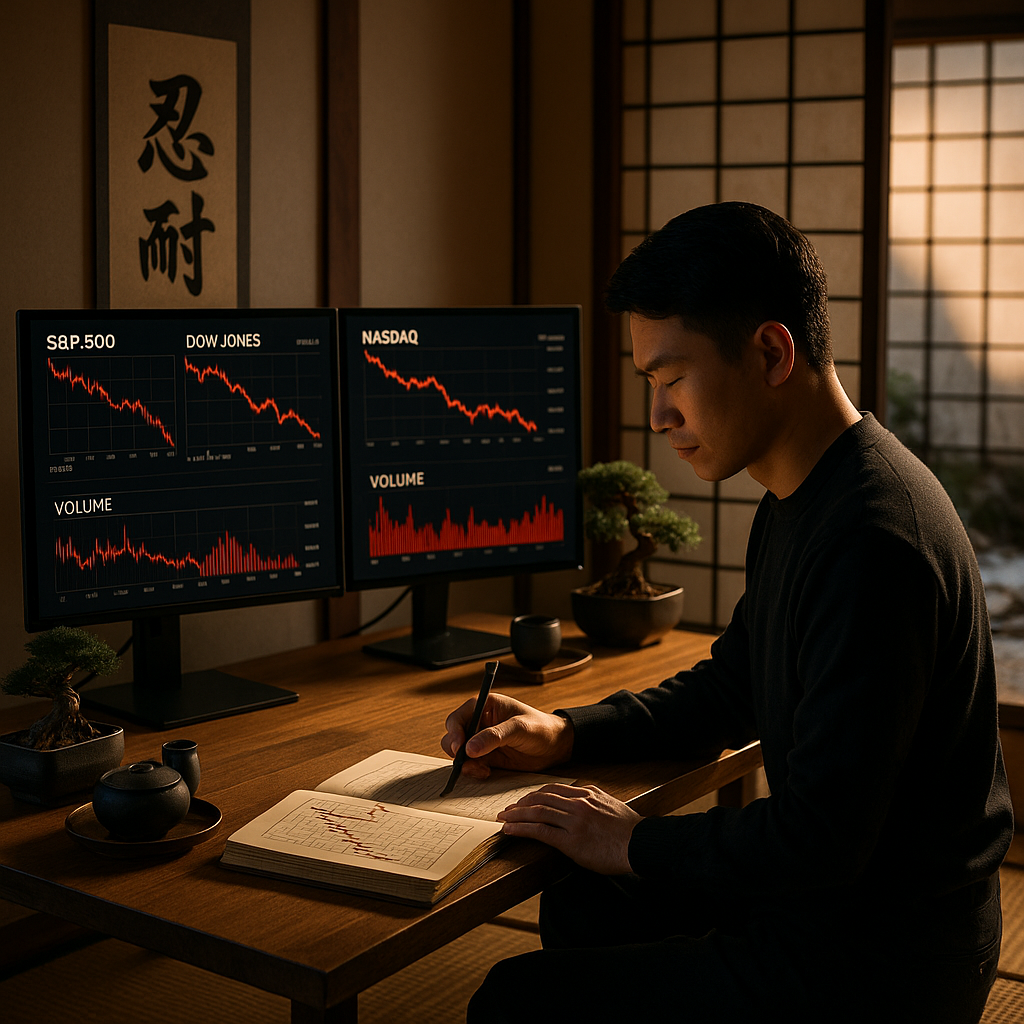
- All major indexes dip: The S&P 500, Dow Jones, and Nasdaq all ended in the red, indicating reduced buying momentum.
- Year-end volume slows: Trading activity declined as institutional investors closed positions ahead of the New Year holidays.
- Santa Rally in question: Analysts are split on whether the traditional late-December rally will materialize amid macroeconomic uncertainty.
- Economic data eyed: Recent inflation and consumer spending figures shaped market caution heading into 2024.
- Next catalyst: New Year’s trading open: Focus now shifts to January’s opening sessions and upcoming earnings as traders assess market direction.
Introduction
U.S. stocks closed lower on Tuesday as holiday trading volumes thinned. The S&P 500, Dow, and Nasdaq all finished in the red amid profit-taking and uncertainty over a year-end “Santa Rally.” With investors weighing economic data and 2024 forecasts, disciplined traders now turn to January’s open for clearer market direction and new opportunities.
Key Market Movements
All three major U.S. indexes finished lower on Wednesday, with trading volumes remaining thin before the year-end holiday period.
The S&P 500 declined 0.4% to 4,698.35. The Dow Jones Industrial Average fell 1.3% to 37,082.00, marking its largest one-day drop this month.
The Nasdaq Composite demonstrated resilience, dipping just 0.2% to 14,777.94 as technology stocks outperformed the broader market. Eight of eleven S&P sectors closed negative, with financials and industrials seeing the steepest declines.
Stay Sharp. Stay Ahead.
Join our Telegram Channel for exclusive content, real insights,
engage with us and other members and get access to
insider updates, early news and top insights.
 Join the Channel
Trading volume was approximately 15% below the 20-day average. This typical year-end slowdown, as institutional investors finalize positions, often amplifies price moves and presents both risks and opportunities for disciplined traders.
Data Driving Sentiment
November’s existing home sales declined 0.8% from October, falling to a seasonally adjusted annual rate of 3.82 million units. This marked the sixth consecutive monthly drop and a 7.3% decrease compared to November 2022.
Lawrence Yun, chief economist at the National Association of Realtors, stated that “the housing data continues to reflect the impact of elevated interest rates, despite recent moderation in mortgage rates.” Persistent weakness in housing has raised concerns about possible effects on consumer spending.
However, consumer confidence offered a positive signal. The Conference Board’s index rose to 110.7 in December from 101.0 in November, well above analyst expectations of 104.0. This improvement suggests resilience in household sentiment, an important factor for traders monitoring consumption trends.
Market Leaders and Laggards
FedEx shares dropped 10.8% after missing quarterly profit estimates and lowering its full-year revenue forecast, citing weak shipping demand. This made it the S&P 500’s worst performer and dragged down the transportation sector.
Energy stocks faced pressure as crude oil prices declined. Occidental Petroleum fell 2.3% and ExxonMobil dropped 1.8%. The energy sector finished down 1.7% overall, underperforming as oil traders balanced geopolitical risks and global demand trends.
On the upside, semiconductor stocks strengthened after Micron Technology’s better-than-expected quarterly results and optimistic outlook. Micron shares surged 8.6%. Peers including Nvidia and Advanced Micro Devices posted gains of 1.2% and 1.8%, respectively, highlighting the role of company-specific catalysts even in a subdued market.
Navigating Market Caution
Year-end trading presents unique challenges and opportunities that require adapted strategies. Low volumes can create misleading price signals, making it essential for traders to focus on confirmed technical patterns rather than reacting to each minor price swing.
Sam Thompson, chief market strategist at Capital Insight, noted that “December’s final trading week typically sees reduced participation and can produce exaggerated moves that don’t necessarily reflect fundamental trends.” Experienced traders often decrease position sizes during this period to accommodate potentially erratic market action.
In thin markets, disciplined trading may include:
- Focusing on larger-cap stocks with steady volume
- Widening stop-loss parameters to account for higher volatility
- Reducing overall position sizes to manage risk
- Prioritizing setups with clear technical support and resistance levels
For those seeking more structure, refining your approach to market volatility and learning the psychological discipline of waiting can be invaluable.
What Lies Ahead
Market participants are closely watching Thursday’s release of the Personal Consumption Expenditures (PCE) price index, which is the Federal Reserve’s preferred inflation gauge. Economists expect core PCE to show a 3.3% year-over-year increase, influencing expectations for interest rate cuts in 2024.
The final Q3 GDP reading also arrives Thursday, with consensus estimates showing annual growth of 5.2%, unchanged from the previous estimate. Any significant revision could impact market sentiment for the year’s end.
Trading remains limited next week, with U.S. markets closed Monday for Christmas and a shortened session Friday. Most major institutional positioning will likely conclude by Friday, shaping the landscape for disciplined traders navigating holiday markets.
Market Wrap
European markets showed more stability than U.S. counterparts. The pan-European STOXX 600 index edged up 0.2% to 477.32. Germany’s DAX rose 0.4%, while Britain’s FTSE 100 was nearly unchanged.
Asian markets were mixed. Japan’s Nikkei fell 0.3%, while China’s Shanghai Composite gained 0.6%. The Bank of Japan’s recent policy meeting minutes revealed growing concerns about maintaining ultra-loose monetary policy, contributing to yen strength that weighed on Japanese exporters.
Stay Sharp. Stay Ahead.
Join our Telegram Channel for exclusive content, real insights,
engage with us and other members and get access to
insider updates, early news and top insights.
Join the Channel
In the bond market, Treasury yields edged lower. The benchmark 10-year yield fell 3 basis points to 3.89%. This slight decline suggests fixed-income traders are positioning defensively ahead of key inflation data and adds context to equity market caution.
For traders interested in refining their preparation for the new year, consider developing a robust trading strategy that incorporates both technical and psychological elements for more sustainable performance.
Conclusion
Thin year-end trading and varied sector performance highlighted the ongoing need for discipline and risk management, even as volatility increased amid low volume. For traders, context and clear analysis remained vital as economic indicators sent mixed messages and institutional activity wound down before the holidays. What to watch: Thursday’s PCE inflation data, the final Q3 GDP reading, and holiday-driven market sessions as 2023 comes to a close.
For those seeking to strengthen their mindset and psychological resilience in uncertain and low-activity environments, explore how patience and preparation can serve as an edge in silent markets.


Leave a Reply