
Key Takeaways
- Stocks declined after a mixed U.S. jobs report as major indices ended lower.
- Technology stocks experienced heightened volatility, reflecting ongoing uncertainty.
- Divergent labor data sparked debate about future Federal Reserve interest rate policy.
- Traders adjusted risk exposure in response to shifting market momentum.
- Next week’s inflation data is expected to provide further direction for investors.
Introduction
Wall Street closed lower on Friday after a mixed U.S. jobs report created renewed uncertainty among investors. Volatility increased in the technology sector, prompting adjustments across several industries. Conflicting labor signals deepened debate over the Federal Reserve’s policy direction. This highlighted the market’s sensitivity to economic developments as traders reassessed risk and awaited upcoming inflation data.
Market Reaction to Mixed Jobs Report
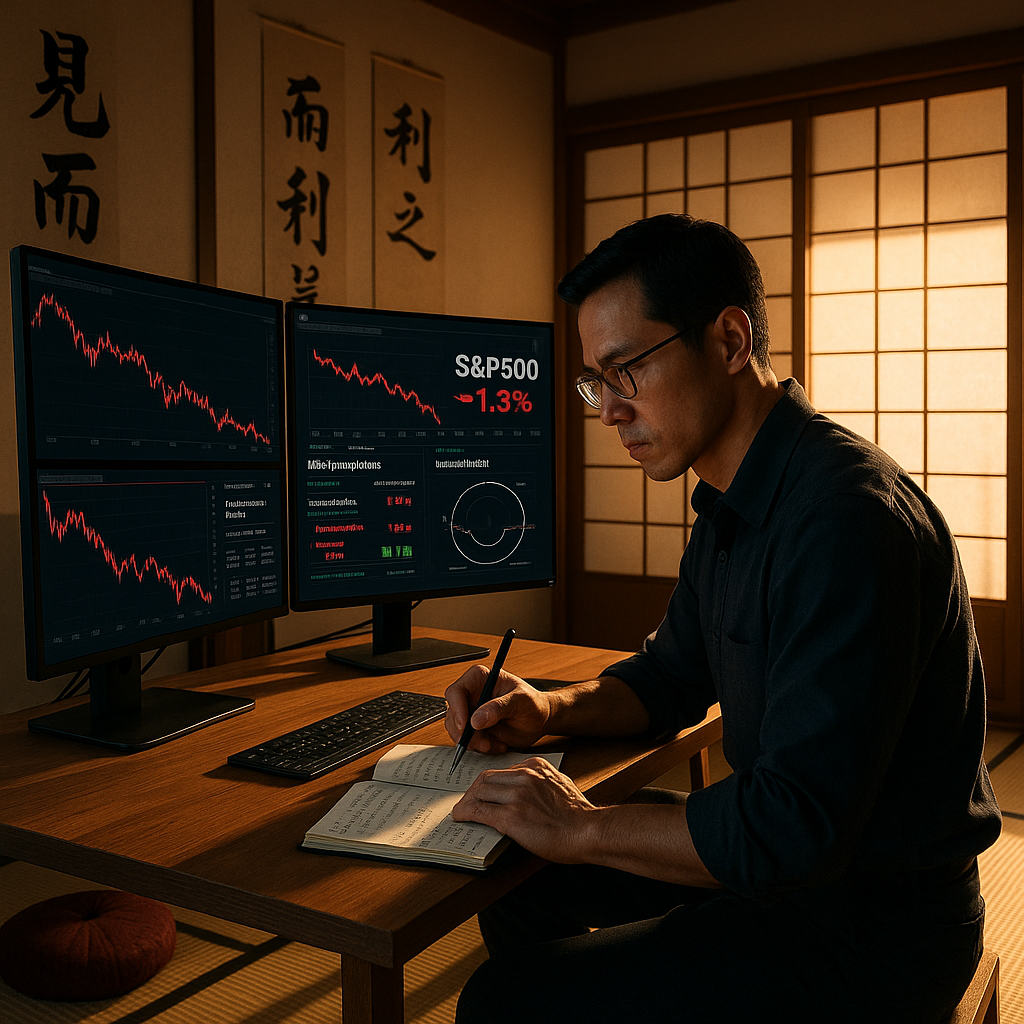
Friday’s trading session saw U.S. stock indices retreat as investors analyzed complex employment figures. The S&P 500 dropped 1.3% to finish at 4,823 points, and the Nasdaq Composite posted a 1.8% loss, marking its sharpest single-day decline since early June.
The Dow Jones Industrial Average fell by 298 points, ending at 38,798, with most components in negative territory. Trading volumes surged approximately 15% above the monthly average as traders adjusted their positions.
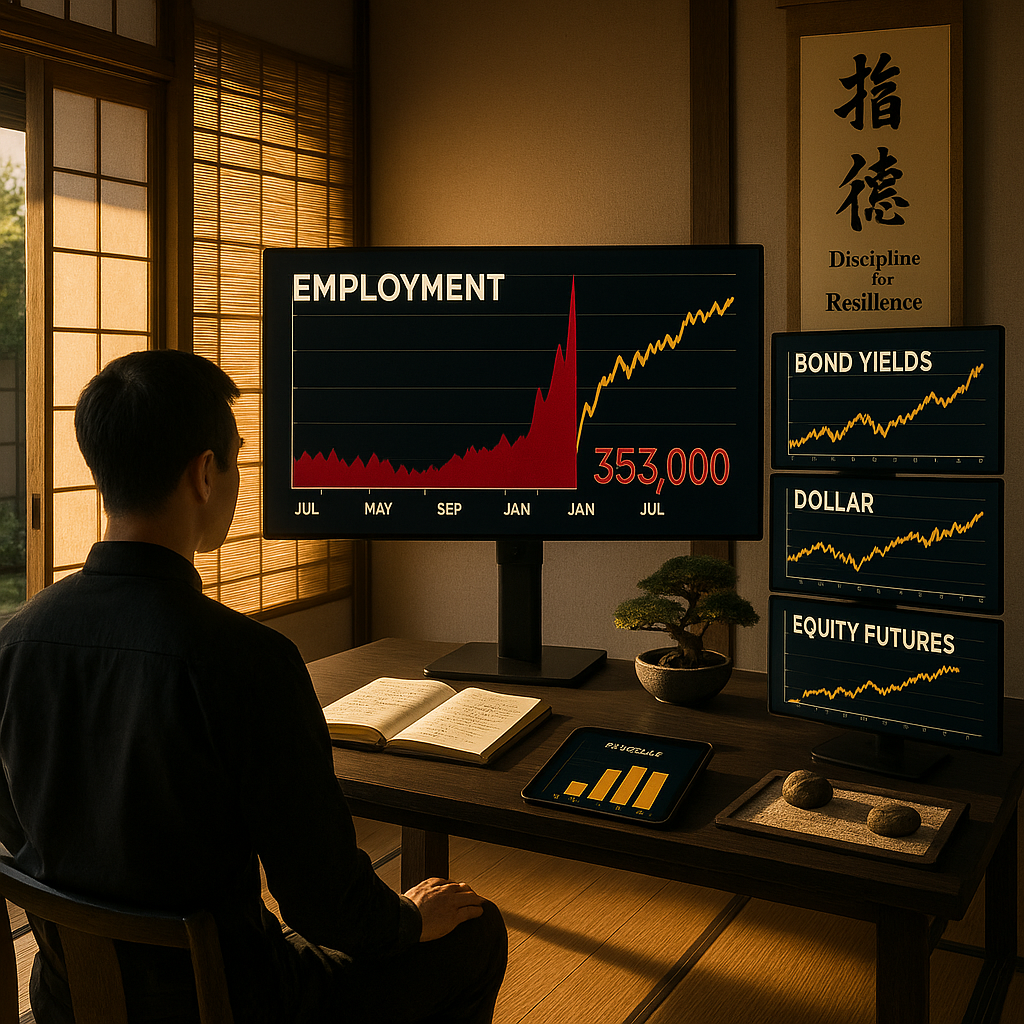
January’s nonfarm payrolls rose by 187,000, surpassing the 175,000 consensus, while the unemployment rate increased unexpectedly to 3.9%. This contrast presented traders with an unclear outlook and complicated market direction.
Stay Sharp. Stay Ahead.
Join our Telegram Channel for exclusive content, real insights,
engage with us and other members and get access to
insider updates, early news and top insights.
 Join the Channel
According to Marcus Chen, chief market strategist at Meridian Capital, the report created a paradox that made straightforward forecasting challenging. While robust hiring signaled economic resilience, the uptick in unemployment raised concerns about potential underlying weakness.
Tech Sector Volatility Intensifies
The technology sector experienced significant price swings as earnings announcements and economic data contributed to heightened volatility. The Nasdaq 100 index moved within a 2.3% range before closing down 2.1%.
Semiconductor companies were particularly affected. The Philadelphia Semiconductor Index slid 3.7%, its weakest performance in three months. Nvidia declined 4.2% despite the absence of company-specific news, highlighting the sector’s sensitivity to broad market sentiment.
Cloud computing and software firms also struggled, leading the IGV Software ETF to lose 2.9%. Many recent earnings leaders gave back previous gains as traders opted to secure profits amid broader uncertainty.
Sophia Williams, technology analyst at Brookline Securities, observed that technology stocks remain exceptionally vulnerable to volatility when economic narratives become less clear, especially given their premium valuations.
Impact on Interest Rate Expectations
The release of mixed labor data led to an immediate adjustment of interest rate forecasts and contributed to wider market swings. Federal funds futures reflected reduced expectations for a March rate cut, dropping from 65% to 38%.
Treasury yields increased across maturities, with the 10-year yield rising 12 basis points to 4.03%, and the 2-year yield, closely tied to near-term Fed policy, climbing 15 basis points to 4.37%.
Market participants, using the CME FedWatch Tool, now anticipate fewer rate cuts in 2024, scaling back from six to four potential reductions. This change mirrors growing uncertainty about whether economic circumstances will justify aggressive policy easing.
Elizabeth Torres, fixed income strategist at Atlantic Financial, noted that strong job creation may diminish the need for immediate monetary accommodation, whereas rising unemployment could point to emerging vulnerabilities that require policy attention.
Trading Lessons from Market Volatility
Recent market action emphasizes the importance of disciplined trading amid conflicting data. Skilled traders recognized the value of reducing position sizes when faced with ambiguous signals, opting for caution over bold predictions.
Many professionals favored relative value trades, comparing similar securities, rather than taking outright directional bets. This method provides stability when broad market direction is uncertain.
The most disciplined participants kept confirmation bias in check, considering both positive and negative data points. They adjusted risk exposures systematically, avoiding reactive or emotional responses.
Robert Jackson, trading psychology coach at Trader Development Institute, explained that professionals respond to uncertainty by seeking clarity and reducing risk. In contrast, less experienced traders may act out of impulse.
Sector Performance and Rotation
Financial stocks outperformed many other sectors, with the Financial Select Sector SPDR Fund (XLF) down only 0.4%. Higher yields and a steeper yield curve supported bank profit margins, helping to limit declines.
Energy stocks lagged after crude oil prices dropped 2.3% to $72.15 per barrel. The Energy Select Sector SPDR Fund (XLE) fell 2.1%, and major producers Exxon Mobil and Chevron posted declines as well.
Defensive sectors (utilities, consumer staples, and healthcare) displayed resilience. Each declined less than 1% as investors sought stability in less economically sensitive industries.
Stay Sharp. Stay Ahead.
Join our Telegram Channel for exclusive content, real insights,
engage with us and other members and get access to
insider updates, early news and top insights.
Join the Channel
Victoria Chen, senior market analyst at Pioneer Investments, stated that sector performance followed a classic risk-off approach, with capital shifting to companies perceived to have more reliable earnings during periods of economic uncertainty.
Positioning for Uncertain Markets
Navigating uncertain markets depends on building specific skills rather than making big predictions. Professional traders focus on prudent position sizing, allocating smaller amounts to individual trades until market direction becomes clearer.
Many are using defined-risk strategies, such as option spreads and collars, to set boundaries on potential losses while maintaining exposure to opportunities.
Technical analysis plays a greater role when fundamental signals are conflicting. Support and resistance levels, momentum indicators, and volume analysis become crucial tools. For practical frameworks that integrate price levels and market structure, see the technical analysis learning hub.
James Wilson, trading educator at Market Mastery Academy, highlighted that disciplined traders are prepared to acknowledge uncertainty and gradually scale positions as confidence grows. They avoid forcing decisions in unclear conditions.
Conclusion
U.S. markets closed lower as mixed employment data drove volatility and adjustments in interest rate expectations, with technology stocks facing the largest declines. The session highlighted the importance of disciplined risk management during periods of conflicting economic signals. What to watch: Further developments in Federal Reserve policy expectations and upcoming economic data that may offer greater clarity on rates and sector outlooks. For more on trading discipline and decision-making under uncertainty, explore the trading psychology hub, and to learn about systematic approaches for dynamic market environments, visit the trading strategies section.


Leave a Reply